
SERVICE POSTER


- Hits: 501


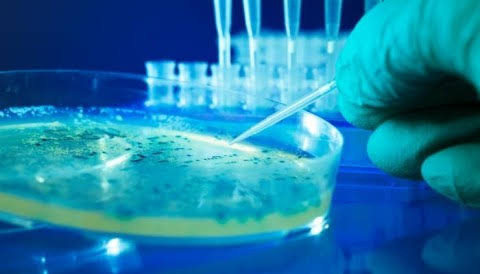
We are pleased to announce that the Universiti Sains Malaysia – Microbial Culture Collection (USM-MCC) at the Centre for Chemical Biology (CCB) is now recognized as a National Depository Authority (NDA) in Malaysia under the Patents (National Depository Authority) Regulations 2022.
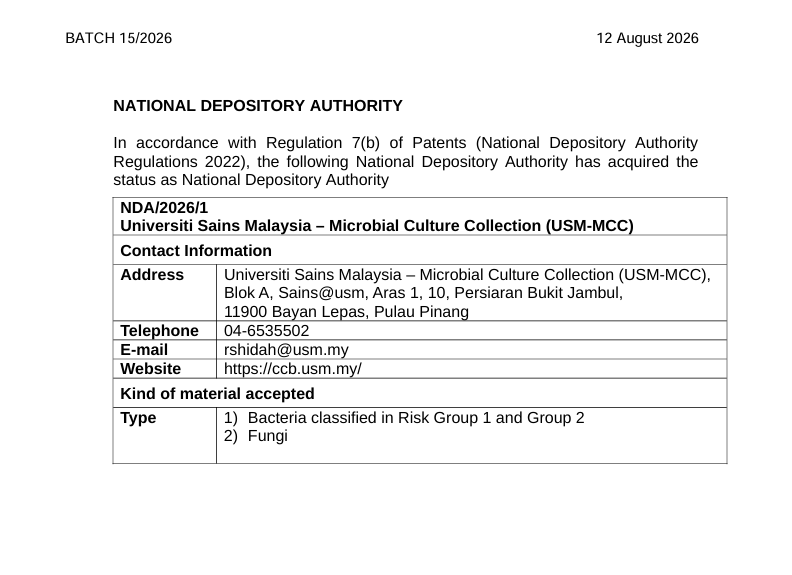
We also provide patent deposit and safe microbial preservation services to support your research, innovation, and long-term culture storage needs. This service is designed to support researchers, institutions, and industries in ensuring the long-term viability, stability, and accessibility of microbial strains.
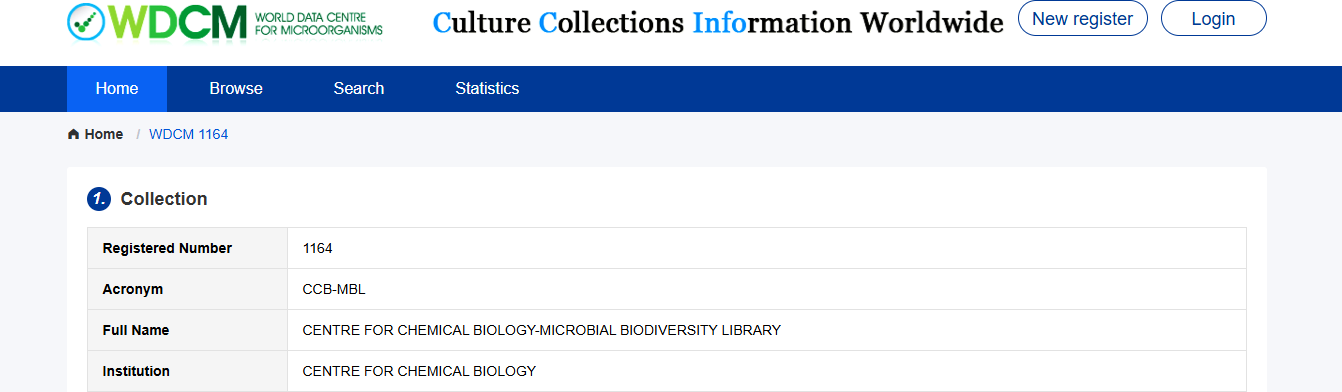
On top of that, the Centre for Chemical Biology (CCB) is registered and indexed under the WFCC-MIRCEN World Data Centre for Microorganisms (WDCM), an international data centre dedicated to microbial resource information. Here's the link: https://ccinfo.wdcm.org/details?regnum=1164

This service is ideal for researchers who need reliable microbial preservation and easy access to diverse, well-identified strains.
Read more …Universiti Sains Malaysia – Microbial Culture Collection (USM-MCC)
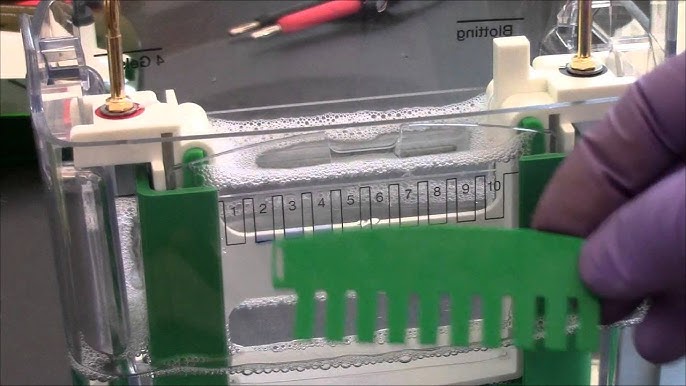
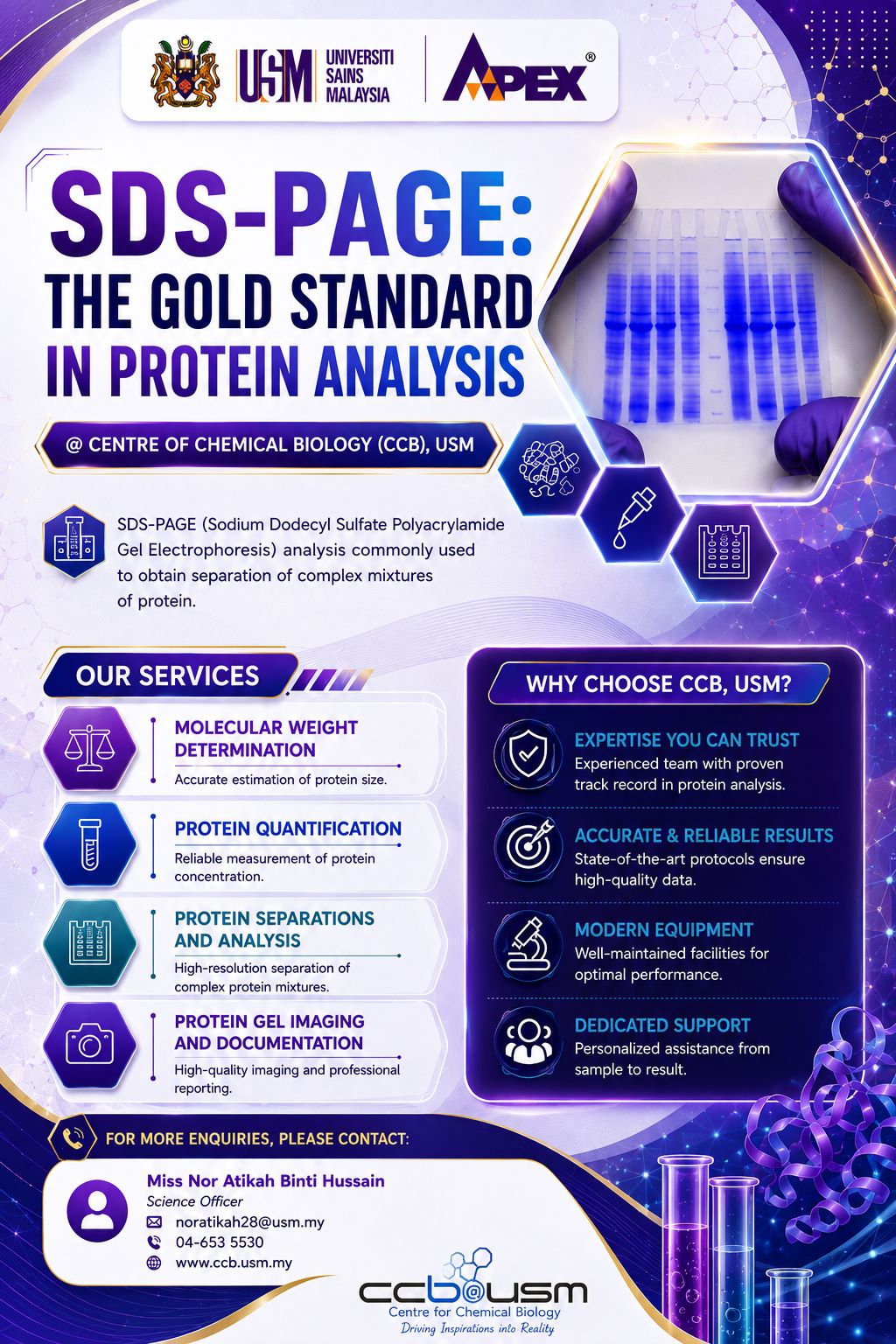
The Sodium Dodecyl Sulfate Polyacrylamide Gel Electrophoresis (SDS-PAGE) service at CCB is a reliable and widely used method for analyzing proteins based on their molecular weight. This technique separates proteins under denaturing conditions, allowing accurate identification, quantification, and profiling of protein samples.
Our SDS-PAGE Service Offers:
- Molecular Weight Determination
- Protein Quantification
- Protein Separation & Analysis
- Protein Gel Imaging & Documentation
Using optimized protocols and high-quality equipment, we ensure clear, reproducible results suited for research, diagnostics, and industrial needs.
Benefits of SDS-PAGE at CCB:
- High accuracy in protein size estimation
- Efficient detection of impurities or degradation
- Ideal for quality control in protein purification processes
- Essential for comparing expression levels in different samples
- Professional documentation with high-resolution gel images
Whether you are analyzing recombinant proteins, enzyme expression, or sample purity, our SDS-PAGE service provides dependable, publication-ready data.
For more information, feel free to contact:
Miss Atikah (tel: +604-653 5530; email: noratikah28@usm.my)

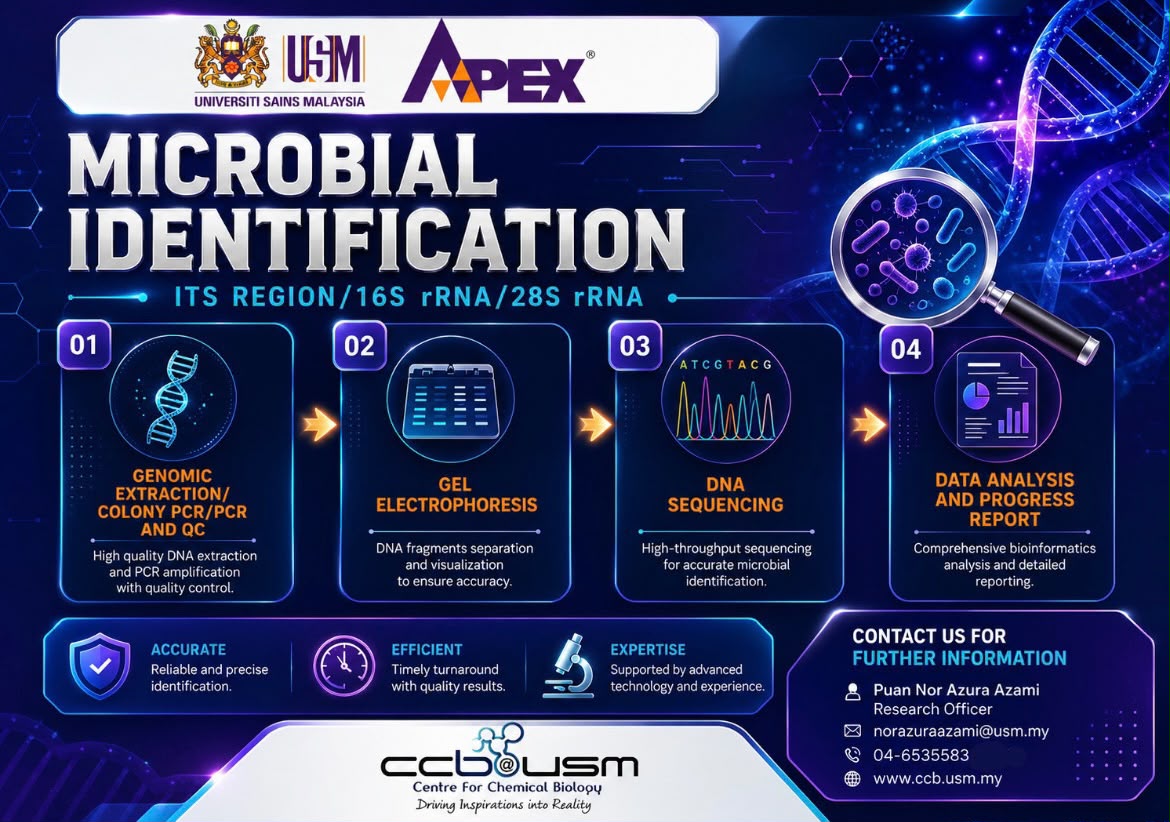
At the Centre for Chemical Biology (CCB), we provide comprehensive microbial identification services for both bacteria and fungi, combining molecular techniques with expertise to support research, diagnostics, and industry needs.
Molecular Identification: 16S rRNA Gene (Bacterial Identification)
The 16S ribosomal RNA (rRNA) gene sequencing is a highly reliable method for identifying and classifying bacteria and archaea. This method compares the 16S rRNA gene sequence of an unknown isolate to reference sequences from type strains of known prokaryotic species. It allows for accurate, routine identification at the genus and often species level — ideal for microbial taxonomy, quality control, and research applications.
Molecular Identification: ITS and/or D1/D2 Region (Fungal Identification)
Traditional identification of fungi—filamentous or yeast—relies on morphological and biochemical traits, which may not always be accurate due to variations within a species. At CCB, we focus on molecular identification using the Internal Transcribed Spacer (ITS) region and *D1/D2 domain of the 28S rRNA gene for precise species-level fungal identification. This method enhances accuracy and reliability, especially for diverse environmental or clinical samples.
Additional Microbial Services Available at CCB:
- Public Depository of microbial strains
- Safe Deposit (confidential storage for private strains)
- Viability Testing
- Preservation of microbial cultures
- Purchase of Microorganisms from the CCB public access culture collection (CCB-MBL)
- Microbial Identification (Bacteria via 16S rRNA; Fungi via ITS, D1/D2, or Tubulin gene)
Our services cater to researchers, industrial partners, and academic institutions looking for high-confidence microbial identification and reliable microbial strain support. Trust CCB to help you uncover and preserve the invisible diversity of life.
For more information, feel free to contact:
Mrs Azura (tel: +604-653 5583; email: norazuraazami@usm.my)

The insects are traditionally identified based on the morphological analysis. This method however has limitations due to the need of trained insect taxonomists within each insect group and at many instances the unknown insect specimen to be identified is morphologically incomplete for reliable identification. Hence, DNA barcoding has become the method of choice for a rapid, reliable, and cost-effective identification of insect specimens. CCB is one of the leading experts in providing DNA barcoding and identification service of insect specimens including urban pests to forest and aquatic insects based on advanced molecular techniques.
For more information, please contact:
Associate Professor Dr. G. Veera Singham (Tel: +604-6535534, Email: veerasingham@usm.my)